
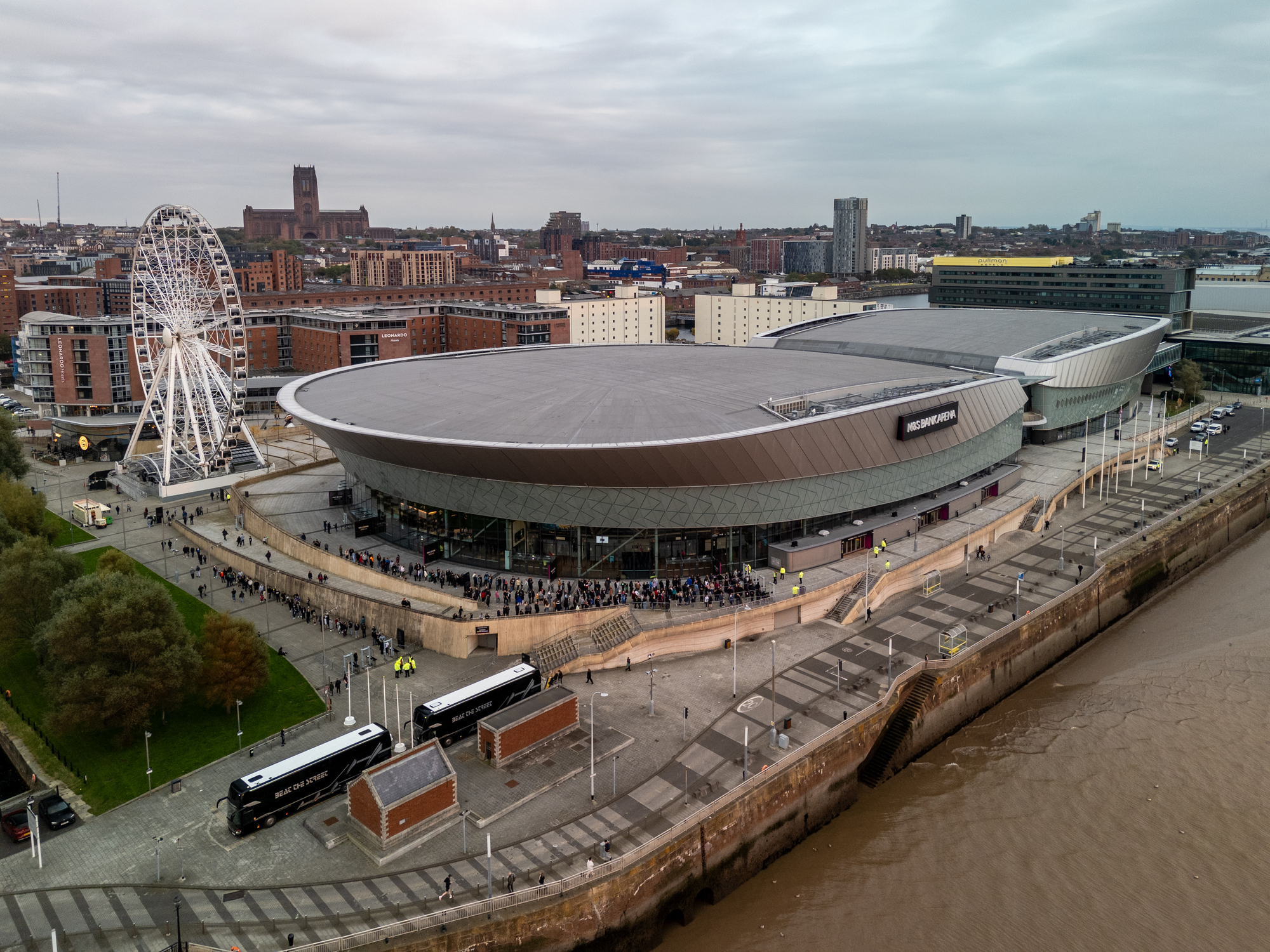
Andy Burnham's key message in his first conference speech as Labour leader was that Britain should have hope again, and that he would end a decade of drift and division.
Much of the coverage is focusing on what that meant for voters – the biggest council house building programme since the post-war era, a new National Care Service, and an overhaul of the electoral system. But did Burnham deliver hope for B2B business leaders? And if he did, could that hope turn into the kind of confidence that unlocks investment – including B2B marketing budgets, which so often align closely with business sentiment?A sceptical audience
B2B business leaders have good reason to be sceptical. Burnham himself noted that he is the seventh Prime Minister in 10 years. Relations with businesses soured after Rachel Reeves put a £25bn tax rise on employers, and borrowing is expensive, with ten-year gilt yields recently hitting an 18-year high. For many B2B businesses, that uncertainty has shown up as delayed decisions, longer sales cycles and cautions spending – marketing included.Anticipating the accusation that increasing public control is yet more anti-business policymaking, Burnham argued the opposite. Businesses need the basics to be functional and affordable too, which is why, as he put it, you can't build on the Water Works and the Electricity Company on the Monopoly board.

Some good news on energy
Perhaps the most important section for industry was on energy. Burnham highlighted energy costs as one of the biggest barriers to growth and set a goal of bringing them in line with the rest of Europe within ten years. His route there includes a major expansion of homegrown renewables and nuclear, faster progress on breaking the link between UK power prices and the international gas market, and a “pragmatic” approach on the North Sea as a bridge to a clean energy future.He also announced a publicly-owned Great British Grid, designed to increase competition and speed up connections, including by letting firms stuck in the queue build their own infrastructure. Connection delays have long been blamed for pushing up costs for businesses.
Backing British B2B businesses
There were further pro-business moments.Burnham set out technical pathways from 14, with a 45-day work placement between 16 and 18 an apprenticeship at 18, which could help ease the skills shortages many B2B businesses report. He committed to changing government procurement so that it backs British business – something that’s happening right now with the energy regulator being told to weigh in British jobs and manufacturing when overseeing grid investments. For B2b businesses that sell into the public sector, that could open new opportunities.
This comes on top of Chancellor John Healey last month promising to “draw a line” under rising business costs.

Delivering growth in every postcode
Burnham reiterated his commitment to drive good growth in every postcode by returning power to the local level and allowing places to decide their own destiny. Business will have a big voice in this.Some may see his talk of the “reindustrialisation” of the regions as being nostalgic. But it is in fact a hugely forward-looking agenda, with the goal of placing world-beating British manufacturers and service providers at the frontier of new technology.
The new Number 10 North office in Manchester will oversee this reindustrialisation, backed by local industrial strategies and a “triple helix” approach that brings business, academia and government together behind one plan.
This was one of the most hopeful parts of the agenda, treating regional businesses as an engine of national renewal.
Putting AI at the centre future investment and what this means for B2B marketing
AI is where this ambition will be most tested. Burnham returned to the theme of his UN debut last week, promising to put AI centre stage when Britain takes on the G20 presidency next year. He tied this directly to reindustrialisation - Britain led the first industrial revolution, so why can't it lead the next? There have also been reports that his advisers are reworking the National AI Strategy around British ownership, tech sovereignty, and protecting workers.Of course, this will look very different from Britain's first industrial heyday. “Reindustrialised” Britain’s competitiveness will depend on how well its firms embrace AI in design, production, maintenance and supply chains.
AI is clearly moving from being a marketing technology story to becoming a business strategy story. If AI becomes fundamental to Britain's next stage of economic growth, as B2B marketers we will have to stop treating it simply as another marketing tool, leading with “look what AI can do” and increasingly talk about what AI enables commercially.
Hope isn't confidence
Getting back to that central concept though – hope. Hope for the future isn't the same as confidence today, and businesses run on the latter. That matters for B2B marketers, who so often see their budgets increase and reduce based on wider business confidence (the IPA Bellwether Report has long shown marketing spend tighten when sentiment dip and recover when it improves).So, if Burnham’s hope does turn into genuine B2B business confidence, marketing budgets could be amongst the first to benefit. On this confidence front, though, the picture is more mixed.
The energy parity target is a decade away and GB Grid is being funded through existing resources rather than new money. The government admits the “buy British” approach may involve a short-term cost, and experts have warned that growth in the most advanced industries may not create significant number of new jobs. And of course, the Chancellor has refused to rule out tax rises in the upcoming budget.
Bart Maginn
Growth & Innovation Director
Share this article
What this means for B2B businesses and marketers
For B2B brands, the lesson is to not passively wait for confidence to arrive (in an age of VUCA, the traditional idea of confidence may have forever disappeared). There is a long track record of evidence that brands which keep investing in marketing through uncertain periods tend to come out strong than those who go quiet. Marketing is a driver of growth, not just a beneficiary of it, after all.Right now, the government is telling a story about British industry, regional renewal, and technological leadership. The B2B businesses that can prove their part in it (the jobs they create, the skills they build, the way they use AI to compete) and tell that story to the mayors, public bodies, and other companies now feeling a renewed sense of power and impetus, have the most to gain. That is a job for B2B marketing – turning credentials and initiatives into clear, evidencable narratives that buyers, partners and policymakers can get behind.
So, did Burnham give B2B businesses hope? Some, yes; and more than many expected. But while hope was the theme in Liverpool, confidence will be the next test at the Budget in a month’s time. For B2B marketers, that’s the date to watch.
Discover more B2B insights